Art Without Permission: A Short Film Night That Spoke Louder Than the Institutions
Updated: Jul 27, 2025

Art Without Permission: A Short Film Night That Spoke Louder Than the Institutions
By Liz Wallen
On any given night in Los Angeles, the city hums with narrative. Spray cans hiss beneath freeway underpasses, tires squeal past boarded up storefronts, and someone, somewhere, is writing a poem that might never leave the page. But when graffiti, raw film, spoken word, and the streets that raised them all converge, something powerful happens. That is what happened at Superchief Gallery, where a night of short films centered on LA graffiti culture and social issues unfolded not as a curated spectacle but as a community heartbeat. These kinds of nights shouldn’t be rare. They should be the norm.
Superchief has never been about velvet ropes or industry panels. It is where grit meets gallery, where the overlooked become the main event. And on this night, it wasn’t about polished premieres or red carpets. It was about truth. The films were projected onto a large drop down screen, and every seat was taken. Viewers stood, some in front, others behind, divided physically by the screen but not divided in spirit. That layout, intentionally or not, dissolved the idea of a front row and brought everyone into the same moment. It unified. It validated that they were in this together.
Surrounding the crowd were gallery walls packed with photography curated by Estevan Oriol and Bill Dunleavy, images submitted by members of the local community. For outsiders, these photographs may feel like a gritty revelation, a window into a world they have only glimpsed through cinema or hearsay. But for those who took the images, it is just another day. A cousin on the porch. A mural before it got buffed. A lowrider lined up on Whittier at dusk. Some images featured local legends and neighborhood heroes, faces rarely seen in glossy gallery settings but iconic within their own blocks, their stories woven into the fabric of the streets. The show offered no sensationalism, just reality, captured with honesty and pride.
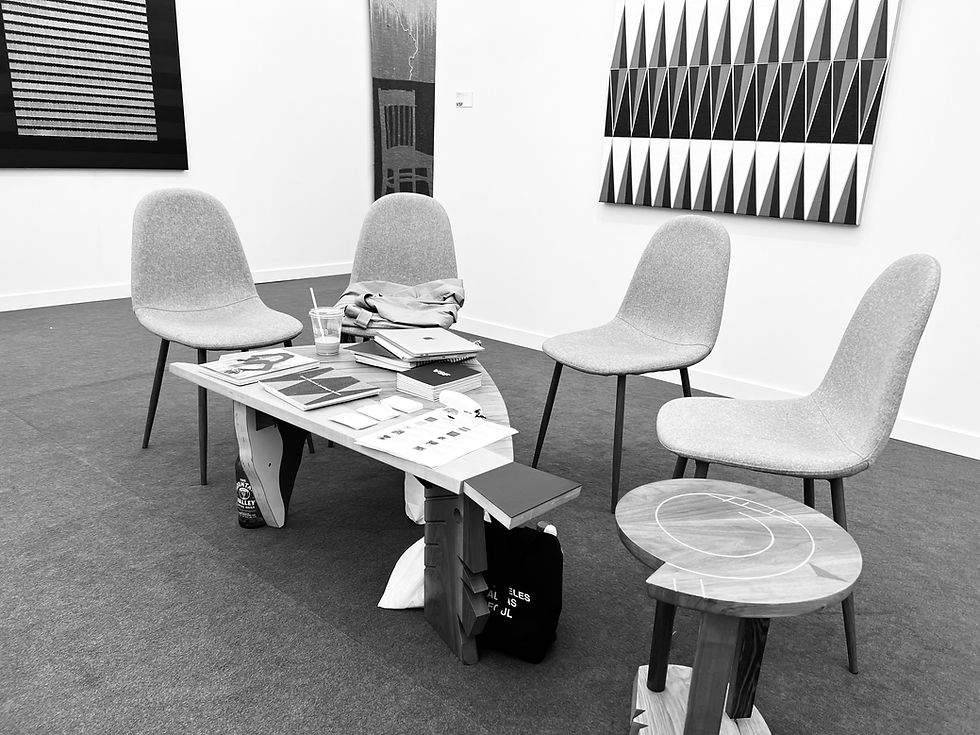
Alongside the screenings was a book and zine fair that felt like a love letter to the city, where artists and collectives laid out self published works that reflected their lives, their neighborhoods, and their identities. These were not polished coffee table tomes. These were hand bound declarations. Zines printed on Risograph machines, books with raw photos, bold type, and urgent energy. Each table was its own archive of resistance, filled with pages no institution has yet canonized, but they should. The people selling them were not just vendors. They were authors, image makers, culture bearers. They offered up their worlds one page at a time.
The films came from creators operating far outside traditional film industry ecosystems. They are not chasing algorithms or acquisition deals. They are chasing something more urgent, reflection, disruption, documentation. Often working with minimal gear, their stories carry a grit that cannot be manufactured because they come from lived experience.
Chop'Em Down Films by Zane Meyer brought the pulse of the streets to the screen with footage that honors the graffiti world as more than aesthetics. It is rebellion, memory, declaration. POETA DEL RIO, filmed and edited by Ruben Presciado in a visual style unmistakably his own, moody, patient, unflinching, layered the poetry of Perro Perdido, which is not your typical verse. It is raw, jagged, and honest. It speaks of loneliness, of drug use, of being addicted not just to substances, but to the chaos and lure of city life. It is not made for literary salons. It is made for those who have walked through fire and stayed burning.
There were other standout films too, equally bold, equally personal. 2 Live and Die in LA served as a cinematic tattoo across the city’s spine, a film that felt like a hymn to the ones who never left. Willie Captures Light, offered an eye shaped by reverence, turning everyday moments into visual gospel. And filmmaker Charley Edwards brought work that stitched together history and immediacy, pulling from cultural memory while grounding everything in the now. Each film, distinct in voice and approach, fit together like chapters from a collective memoir no one else is writing but everyone needs to read. There were many other filmmakers as well—too many to list—but all of the highest caliber, each contributing to a night that felt entirely essential.
These were not studio backed shorts hoping to land at a streaming service. They were acts of presence. And in that presence, something real happened. Unlike high gate festivals like Sundance, where cost, connection, and polish dictate visibility, this night made space for the unseen. Here, the camera did not need to be expensive. The lens did not need to be name brand. What mattered was the eye behind it, and the truth being told.
This is cinema as resistance. As preservation. As urgency.
And it raises the question, will anyone notice? These films, these voices, these handmade books stitched from survival and spirit, this is the work museums will be clamoring to include in their collections years from now. Archivists will dig through hard drives, street corners, and zine bins searching for the roots of this era. But right now, too many institutions are still looking in the wrong direction, waiting for cultural approval from the top down instead of listening to what is already echoing from the streets. If museums continue to overlook the images, stories, and creators of this culture, they risk becoming artifacts themselves, preserving the past while missing the pulse of the present. Because relevance is not built through reputation, it is earned through reflection. And if they are not paying attention now, they may not matter later.
For those lucky enough to be in the room, it felt like stumbling upon a treasure they did not know they needed. These were not just films or photographs or zines. They were reminders. That something sacred still lives outside the frame of the mainstream. That storytelling is not owned by institutions. It belongs to the people. And that when art speaks from the gut and not from the market, it can change what we see, how we listen, and what we think we know about a city we thought we understood.


Comments